
Preserve heat grade
Do not mix hot return water down with cooler streams before it reaches the heat rejection or heat recovery interface. Every degree lost here is a degree the heat recovery layer cannot sell.
How does heat leave the pod, at what temperature, and in what medium? Coral designs the secondary loop for the highest temperature the silicon will tolerate, not the lowest temperature the plant can achieve. Loop supply temperature is the single highest-leverage decision in a data centre thermal design, and the industry has historically got it backwards.
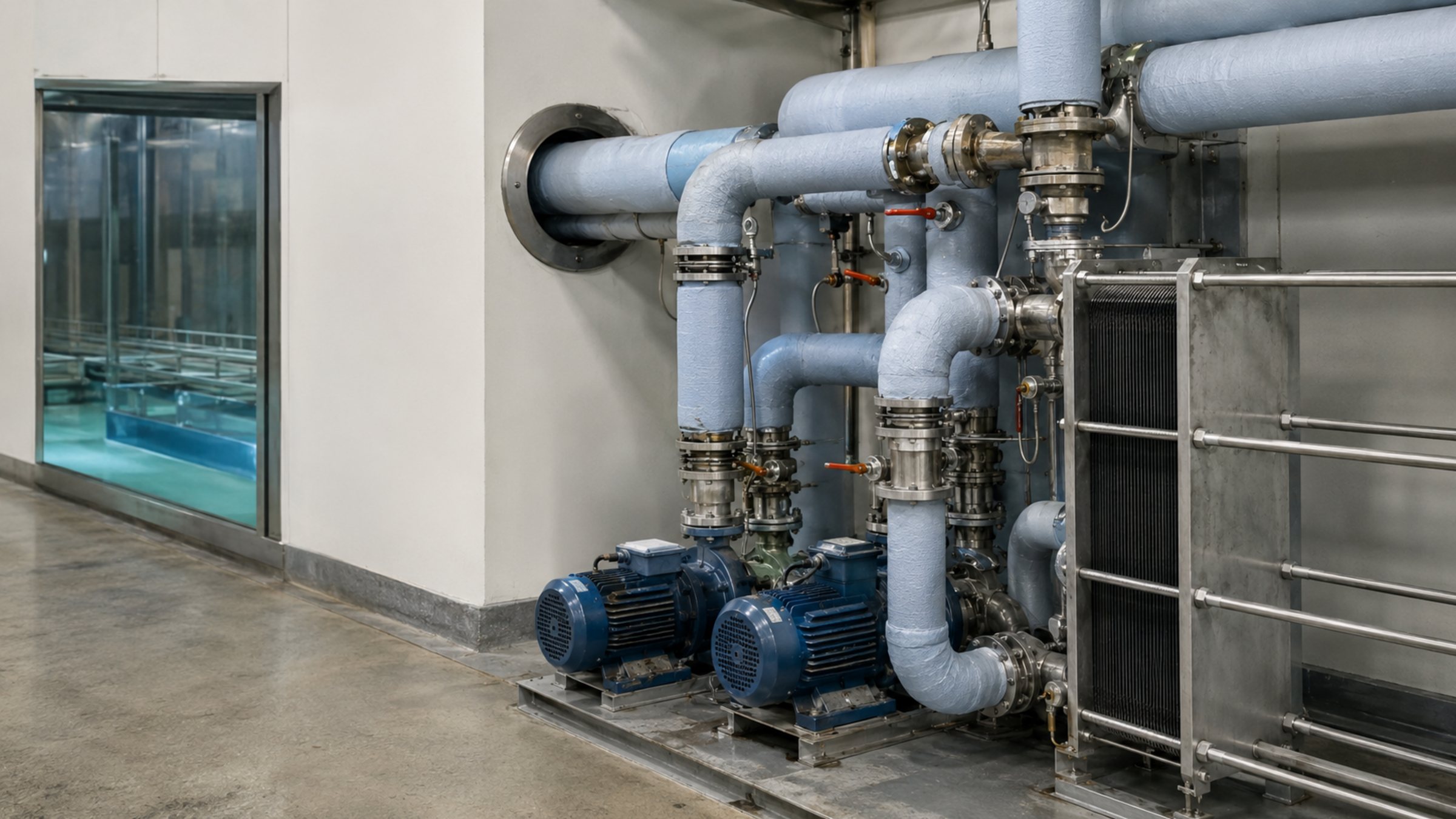
How does heat leave the pod, at what temperature, and in what medium?
Coral designs the secondary loop for the highest temperature the silicon will tolerate, not the lowest temperature the plant can achieve.
The single highest-leverage decision in a data centre thermal design is the loop supply temperature, and the industry has historically got it backwards. Published guidance from the leading AI silicon vendor states that its newest generation servers operate at up to 45 C coolant inlet, with coolant leaving the chips at roughly 55 C. A loop designed to that specification can reject heat with dry coolers for most hours of the year in most climates, needs no evaporative make-up water, and produces return water hot enough to be worth selling. A loop designed to a legacy 20 C supply temperature achieves none of those three things and costs more to run.
Do not mix hot return water down with cooler streams before it reaches the heat rejection or heat recovery interface. Every degree lost here is a degree the heat recovery layer cannot sell.
Match the loop chemistry to the dominant vendor reference so that a Coral pod is a drop-in thermal load in a facility designed to that reference, rather than requiring a bespoke interface.
Buy every component in this layer. Plate heat exchangers, pumps and coolant distribution are mature, competitive and well engineered. Coral's value here is the temperature strategy, not the metalwork.
The current Coral OnPrem Series operates oil at 25-35 C typical, with a 45 C maximum and a 55 C maximum component temperature, at 25 cubic metres per hour through DN50 connections. That is a conservative design point chosen for component margin.
The dominant AI silicon roadmap has moved the other way. Raising Coral's loop supply temperature toward the 45 C band is the single highest-leverage change available to the platform, because it converts trim chiller hours into dry cooler hours and converts return heat from thermally worthless into directly sellable. Coral publishes this as a Gen 2 design decision with the trade-off visible, rather than presenting the current design point as the final answer.
Loop chemistry management across a distributed fleet. Corrosion, biofouling and scaling degrade heat transfer silently and are a leading cause of liquid cooling field failure. Coral treats loop chemistry as an instrumented, managed subsystem rather than a commissioning activity.
A structured technical assessment of power, thermal capacity, density, jurisdiction and deployment sequencing for a specific site.