
Container-based AI data centre pods.
CoralDC container-based AI data centre pods are factory-built, immersion-cooled infrastructure modules that convert available land and power into production AI capacity. A 40ft Coral Pod carries four 42U immersion tanks, 168 rack units and 800 kW of thermal capability in a 28.3 square metre footprint, requires no facility water and no data hall, and is owned outright by the customer.
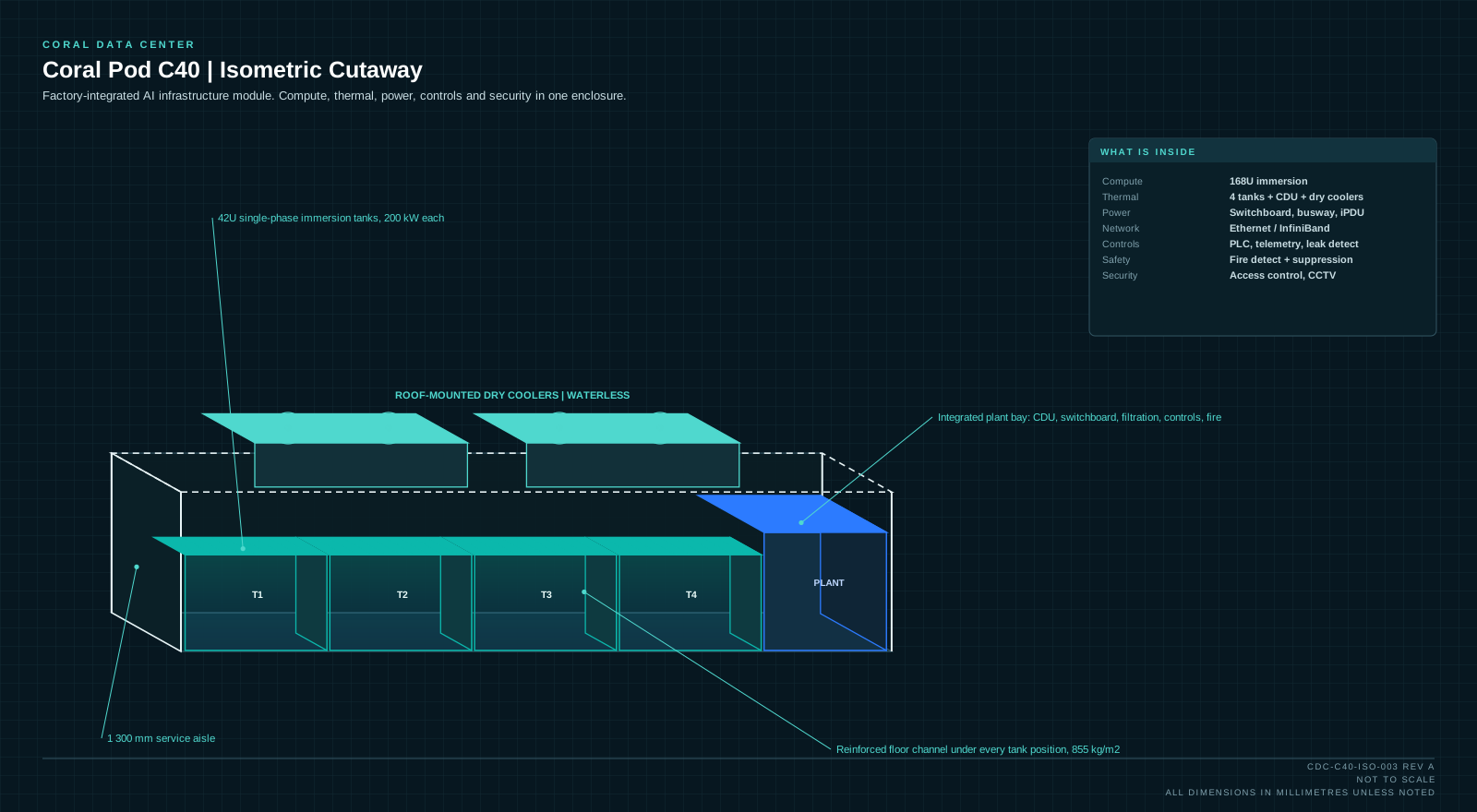
Coral Pod C40, isometric cutaway
AI infrastructure is now power-bound, not space-bound.
For thirty years a data centre was a floor space problem. You bought square metres, filled them with racks at 5 to 10 kW each, and cooled them with air.
AI broke that model. A single rack of current accelerators concentrates more power into two square metres than an entire aisle used to draw, and the next generation is specified to draw more again. The constraint is no longer how many racks fit. It is how much heat can be removed from the space you have, and whether the building can deliver the electricity in the first place.
That is why the useful density metric for AI infrastructure is kilowatts per square metre, not rack units per square metre. A conventional 40ft air-cooled module delivers roughly 5 to 8 kW per square metre. A Coral Pod C40 delivers 28.3 kW per square metre of thermal capability.
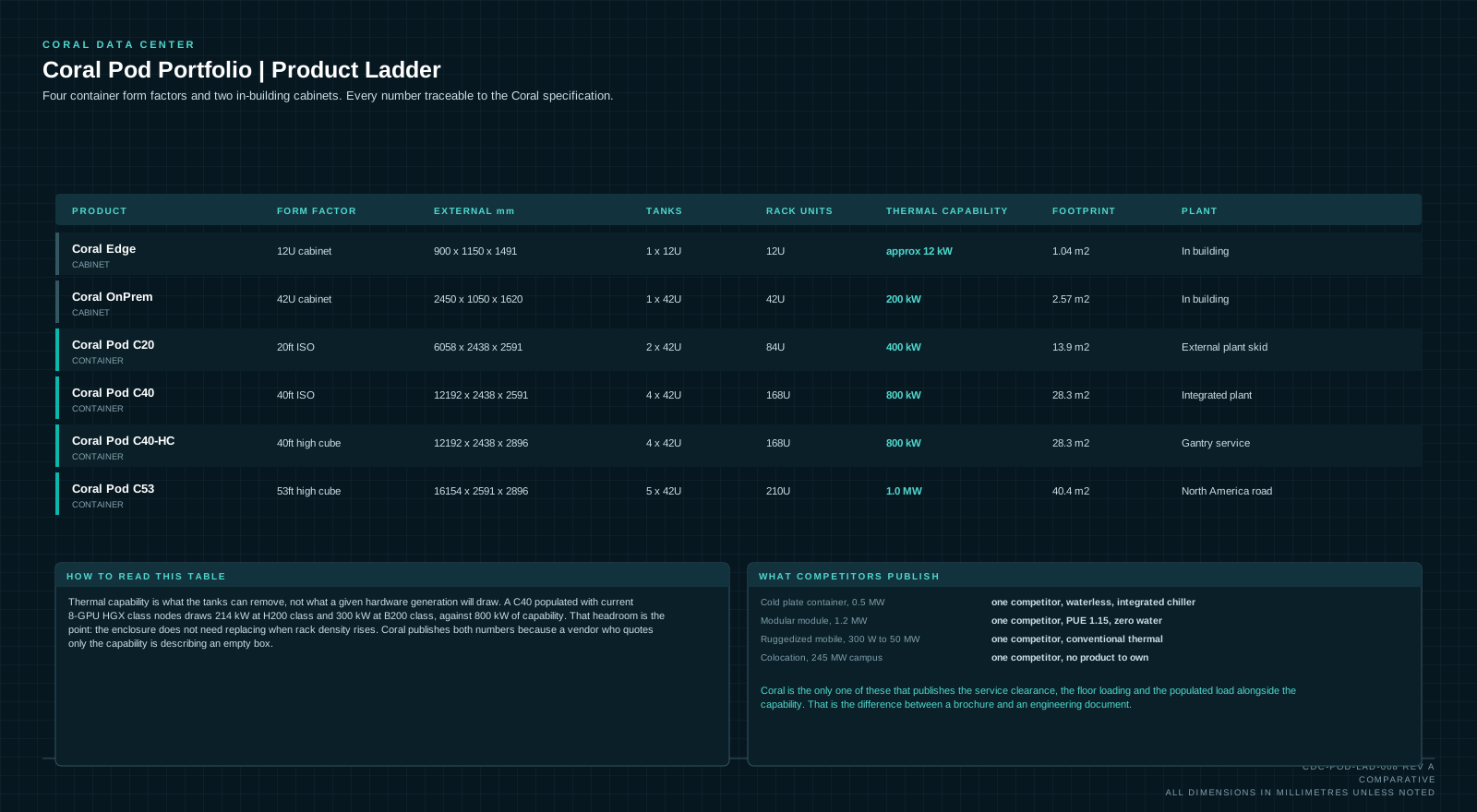
A data centre engineered as a manufactured product.
A Coral Pod is not a container with servers in it. It is seven engineering layers designed together and integrated in a factory: structural enclosure, thermal core, heat rejection, power, network, control and safety, and operations.
The reason this matters is not elegance. It is risk. In a conventional deployment the customer solves power, cooling, water, connectivity, compliance and operations separately, with a different vendor and a different timeline for each, and carries the integration risk alone. That is where modular data centre projects actually fail, and it is the only risk a buyer cannot transfer to a component vendor.
CoralDC moves that integration into a controlled factory environment. Manufacture complexity. Deploy simplicity.
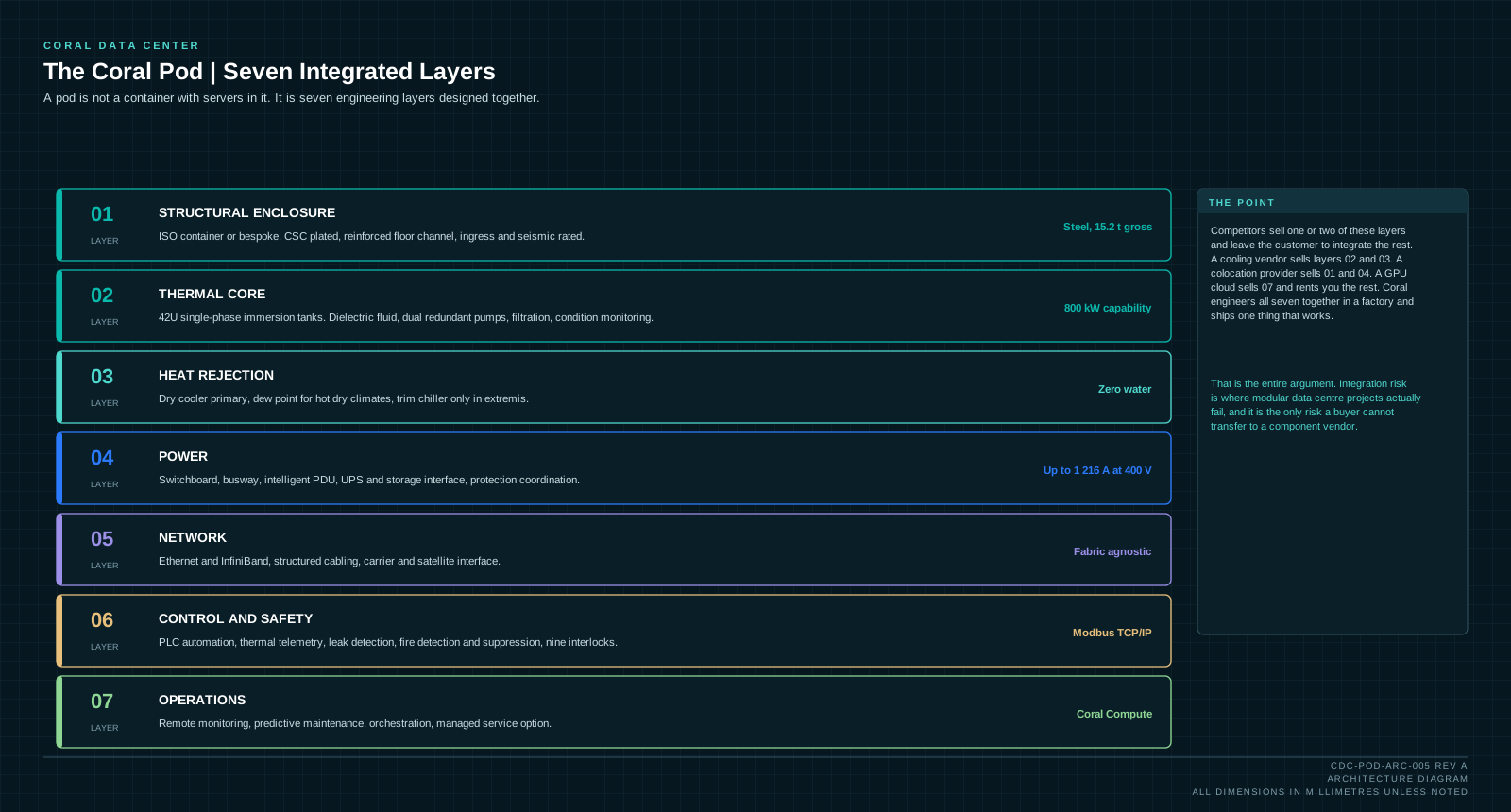
Four container form factors. One thermal architecture.
| Product | Enclosure | Tanks | Rack units | Thermal capability | Footprint | Plant |
|---|---|---|---|---|---|---|
| Coral Pod C20 | 20ft ISO | 2 x 42U | 84U | 400 kW | 13.9 m2 | External skid |
| Coral Pod C40 | 40ft ISO | 4 x 42U | 168U | 800 kW | 28.3 m2 | Integrated bay |
| Coral Pod C40-HC | 40ft high cube | 4 x 42U | 168U | 800 kW | 28.3 m2 | Integrated bay, gantry service |
| Coral Pod C53 | 53ft high cube | 5 x 42U | 210U | 1.0 MW | 40.4 m2 | Integrated bay, North America road |
All thermal capability figures are four times the 200 kW rating of the Coral 42U immersion tank.
Thermal capability is not populated load, and Coral publishes both
Thermal capability is what the tanks can remove. Populated load is what a given hardware generation actually draws. They are different numbers and most of this industry quotes only the first.
| Product | Rack units | 8-GPU HGX H200 class | 8-GPU HGX B200 class | Thermal capability |
|---|---|---|---|---|
| Coral Pod C20 | 84U | 80 GPU, 102 kW | 80 GPU, 143 kW | 400 kW |
| Coral Pod C40 | 168U | 168 GPU, 214 kW | 168 GPU, 300 kW | 800 kW |
| Coral Pod C40-HC | 168U | 168 GPU, 214 kW | 168 GPU, 300 kW | 800 kW |
| Coral Pod C53 | 210U | 208 GPU, 265 kW | 208 GPU, 372 kW | 1.0 MW |
Calculated at 10.2 kW per 8U HGX H200 class node and 14.3 kW per 8U HGX B200 class node. Based on published NVIDIA GPU thermal design power of 700 W for H200 SXM and approximately 1,000 W for B200.
The headroom is the product. A Coral Pod populated today at roughly 27 percent of its thermal capability does not need replacing when rack density rises through the next two hardware generations. The enclosure, the tanks, the pumps and the heat rejection were sized for where the roadmap is going, not for where it is.
Three numbers that decide whether a pod works, and where to find them.
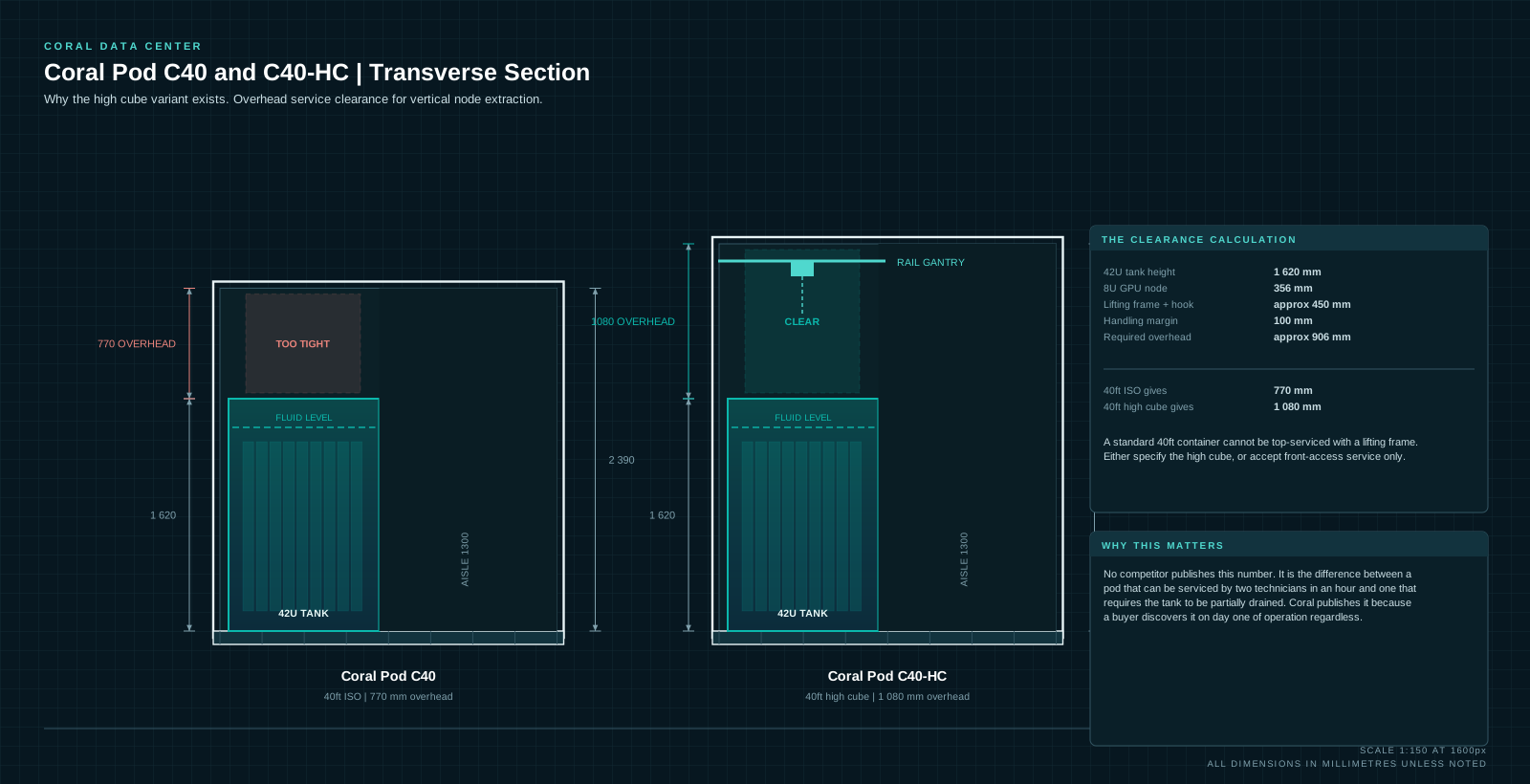
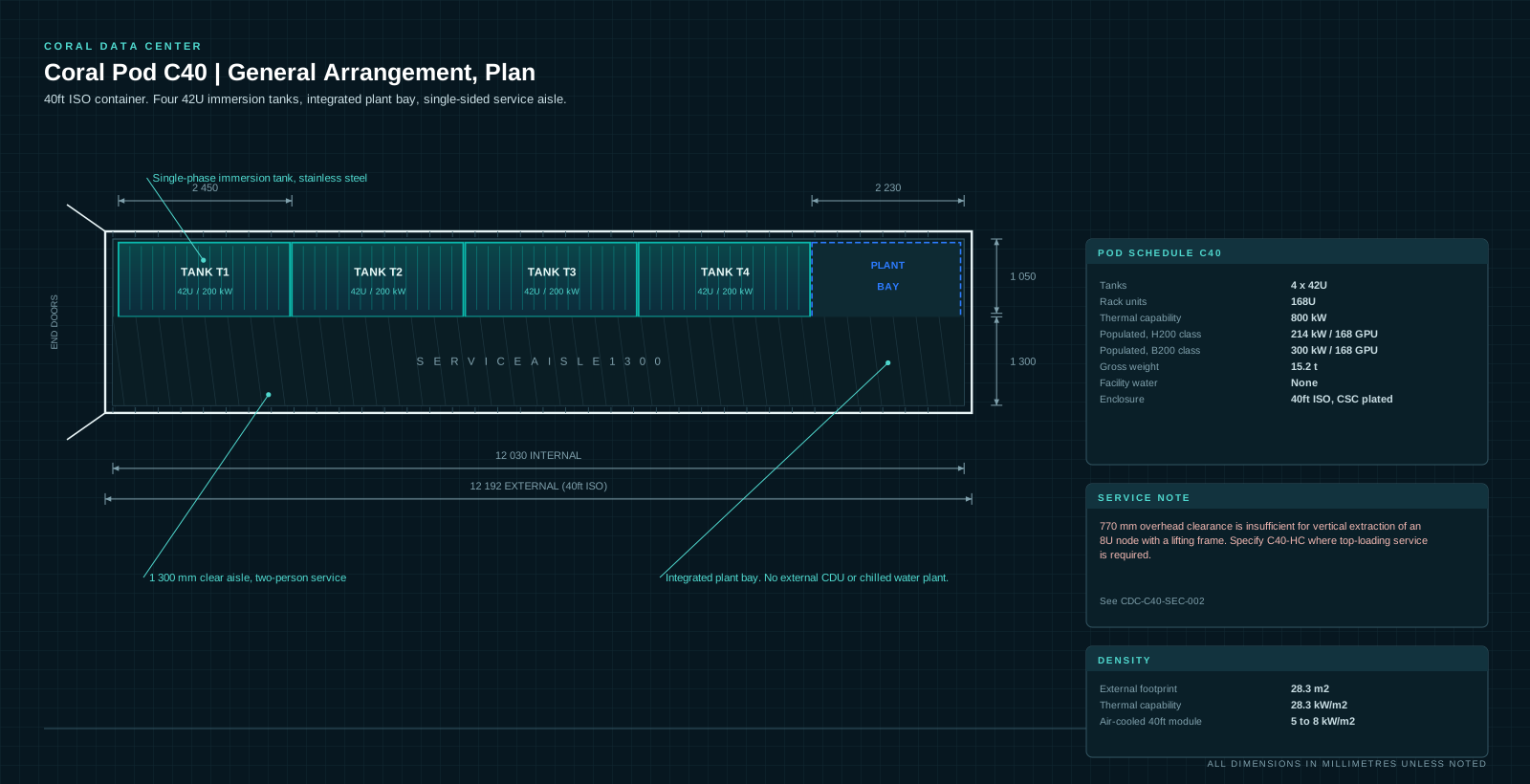
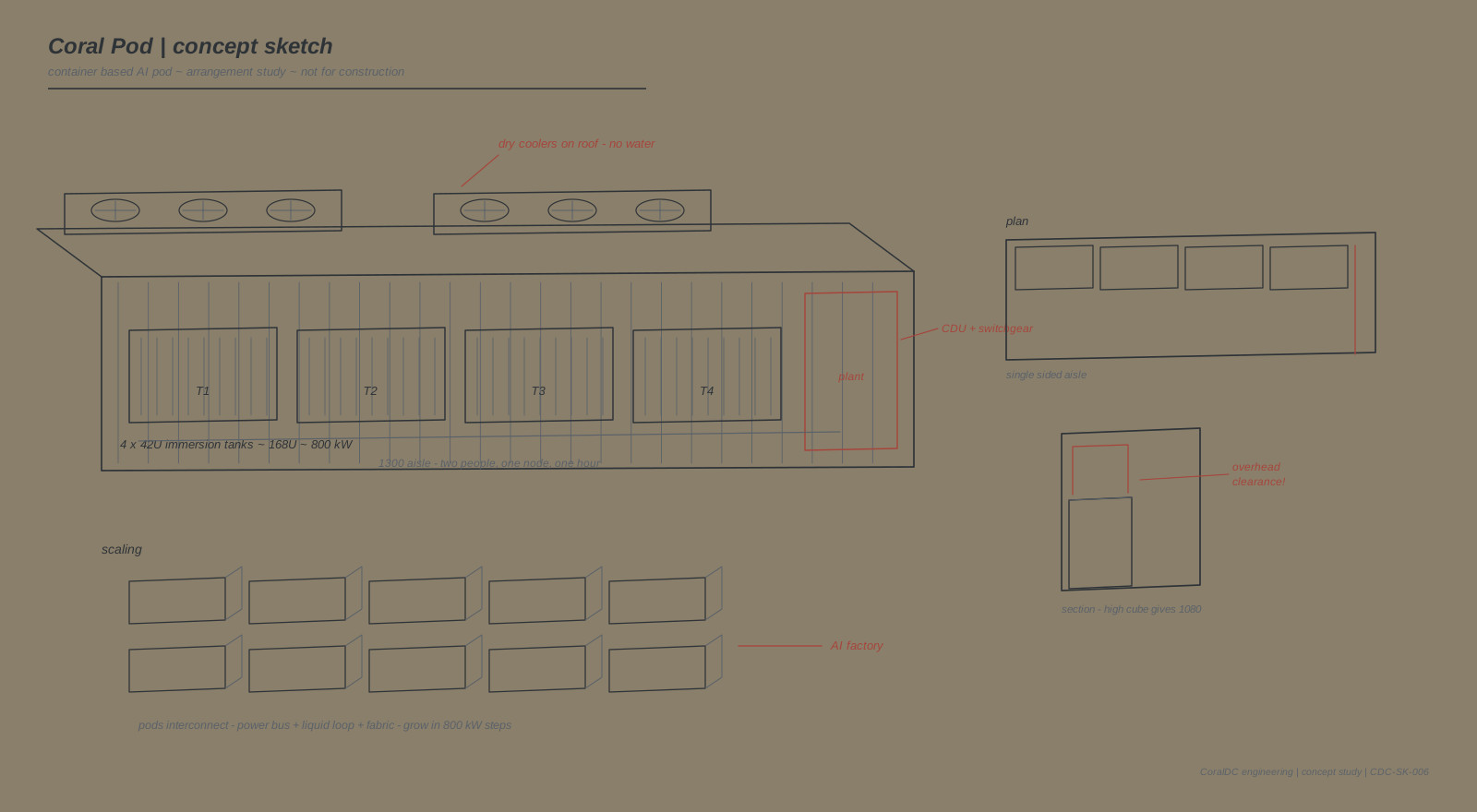
Overhead service clearance. A 42U immersion tank is 1,620 mm tall. An 8U GPU node is 356 mm. A lifting frame and hook adds approximately 450 mm, and handling margin adds 100 mm, so vertical extraction requires approximately 906 mm of clear space above the tank. A standard 40ft container gives 770 mm of internal height above the tank. A 40ft high cube gives 1,080 mm. That is why the C40-HC exists. In a standard 40ft you accept front-access service. In a high cube you get top-loading service with a rail gantry. CoralDC states this on the specification page rather than letting a customer discover it on day one of operation.
Floor loading. A 42U tank has an operating weight of approximately 2,200 kg over a 2.57 square metre footprint, which is 855 kg per square metre, or 8.4 kPa, at every tank position. Every Coral container carries a reinforced floor channel under each tank position as standard. Where a pod is placed on a structure rather than a slab, CoralDC states the loading in writing before survey. A typical data centre slab is rated 1,000 to 1,500 kg per square metre and accepts this without modification. A typical commercial office floor is rated 250 to 500 kg per square metre and requires structural review.
Service aisle. Every Coral container pod has a 1,300 mm clear single-sided service aisle. That is enough for two technicians to work on one node without removing adjacent equipment. It is a deliberate choice to spend container volume on serviceability rather than on tank count, and it is why a C40 carries four tanks rather than a theoretical maximum.
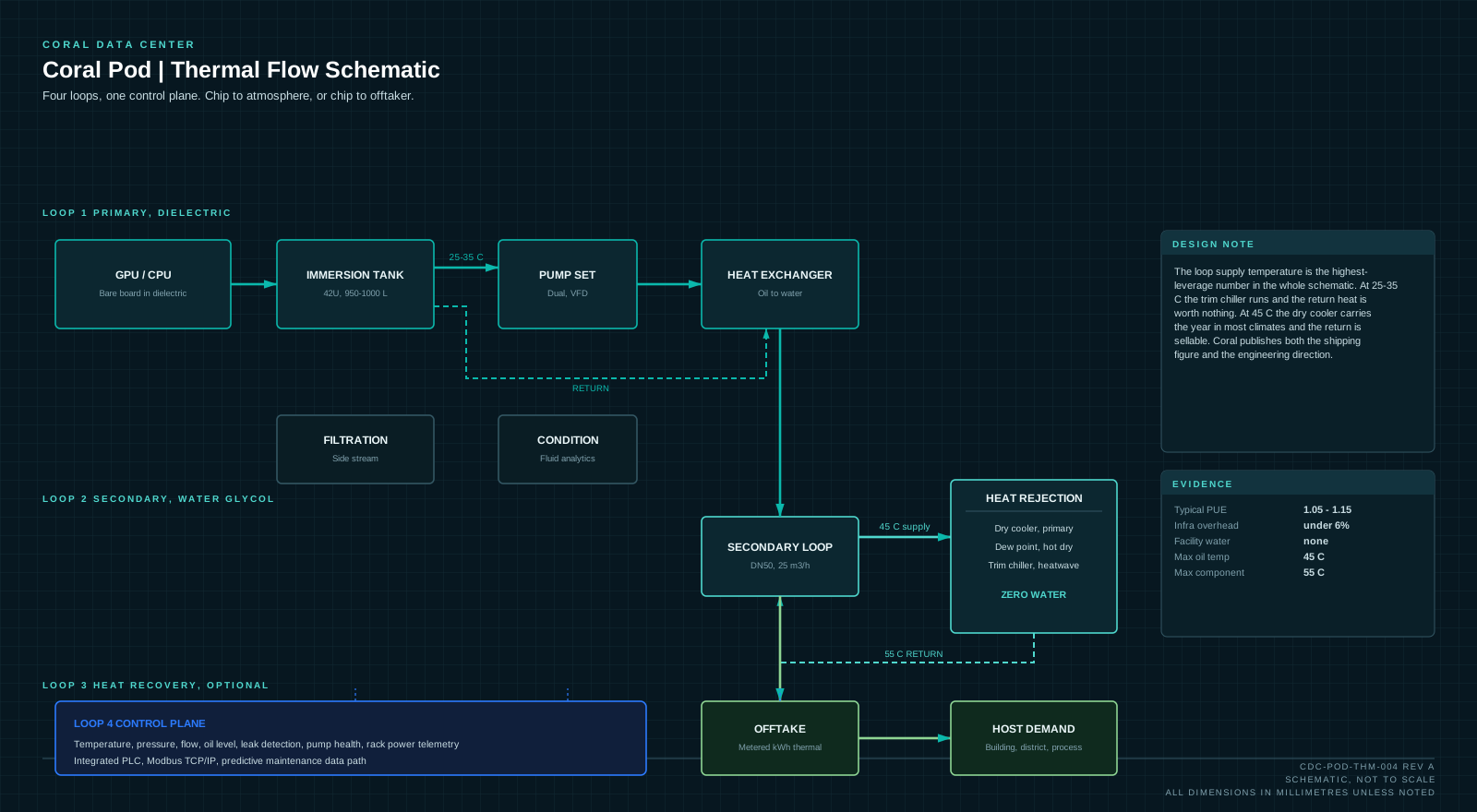
Four loops, one control plane, zero facility water.
Heat leaves a Coral Pod through four loops. The primary loop is single-phase dielectric fluid in direct contact with the board, with dual redundant pumps, side-stream filtration and continuous condition monitoring. The secondary loop is water and glycol at DN50 and 25 cubic metres per hour. The rejection loop is a roof or skid mounted dry cooler as primary, dew point technology for hot dry climates, and a trim chiller only in extremis. The fourth loop is the control plane, which is what makes the other three worth having.
No facility water connection is required in dry rejection configuration.
| Parameter | Value |
|---|---|
| Cooling method | Single-phase immersion |
| Heat removal modes | Oil to air, oil to water, oil to oil |
| Typical operating oil temperature | 25-35 C |
| Maximum oil temperature | 45 C |
| Maximum component temperature | 55 C |
| Recommended ambient | Up to 45 C |
| Operating temperature | Minus 25 C to plus 50 C |
| Relative humidity | 5 to 95 percent, non-condensing |
| Operating altitude | Up to 3,000 metres |
| Cooling fluid | PAO or synthetic dielectric, fluid agnostic |
| Typical PUE, 42U platform | 1.05 to 1.15 |
| Infrastructure overhead | Under 6 percent |
The loop temperature question, stated openly. CoralDC pods operate oil at 25-35 C today with a 45 C maximum. That is a conservative design point chosen for component margin.
Current NVIDIA rack-scale reference designs specify coolant supply up to 45 C, leaving the compute at approximately 55 C. Designing the secondary loop to that band is what converts trim chiller hours into dry cooler hours, and converts return heat from thermally worthless into directly sellable to a nearby offtaker.
Raising the Coral loop supply temperature toward that band is a stated engineering direction for the next platform generation, not a current specification. CoralDC publishes both figures because the difference is the single highest-leverage number in the entire thermal design, and a buyer evaluating a ten-year asset is entitled to know which one applies today.
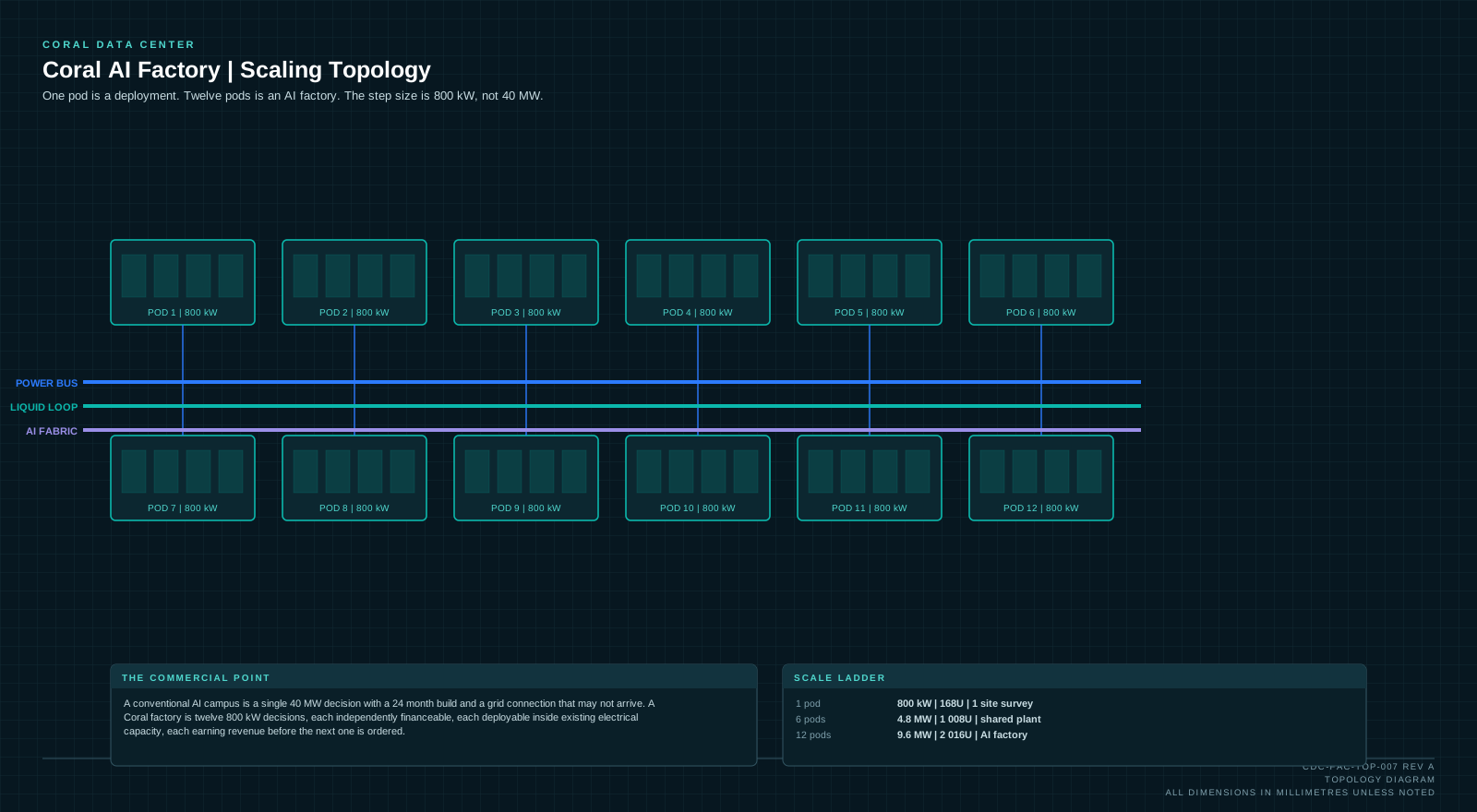
One pod is a deployment. Twelve pods is an AI factory.
A conventional AI campus is a single large decision: one site, one grid connection, one 24 month build, one moment at which capacity arrives or does not.
A Coral factory is a series of 800 kW decisions. Each pod is independently financeable. Each can frequently be sized to operate inside a building's existing electrical capacity rather than waiting on an interconnection queue. Each earns revenue before the next one is ordered. Pods interconnect through three shared services: a power bus, a liquid loop and the AI fabric.
| Scale | Thermal capability | Rack units |
|---|---|---|
| 1 pod | 800 kW | 168U |
| 6 pods | 4.8 MW | 1,008U |
| 12 pods | 9.6 MW | 2,016U |
Factory build removes construction from the critical path.
| Stage | Typical duration |
|---|---|
| Architecture review to written recommendation | 1 to 3 weeks |
| Site assessment and structural sign-off | 1 to 2 weeks |
| Factory build and factory acceptance test | 14 to 20 weeks, configuration dependent |
| Delivery, positioning and connection | Days, not weeks |
| Site acceptance, commissioning and handover | 1 to 2 weeks |
Durations are typical for factory-built modular infrastructure of this class and are confirmed per site during the architecture review. The structural advantage is that a self-contained pod removes data hall construction entirely, where a conventional build is measured in quarters or years.
What Coral does that a cooling vendor, a colocation provider and a GPU cloud each cannot.
| If you buy from | You get | You still have to solve |
|---|---|---|
| A cooling equipment vendor | Thermal hardware, sometimes in a container | Compute, integration, power coordination, operations, sovereignty |
| An infrastructure component vendor | Power, racks, monitoring | Everything AI-specific, and the thermal architecture |
| A GPU cloud | Capacity, quickly | Physical custody, data residency, cost predictability, the fact that you own nothing |
| A colocation provider | A building | Moving your workload to their building, and the lease |
| A ruggedised mobile data centre vendor | Speed and connectivity | Thermal density, because conventional cooling caps rack power |
| CoralDC | All seven layers, factory integrated, that you own | Nothing that a modular vendor should be leaving with you |
CoralDC is a Canadian company. Engineering, systems integration and deployment are based in Vancouver, British Columbia. For Canadian and United States government, defence, healthcare and critical infrastructure procurement, country of engineering is a scored criterion rather than a preference, and CoralDC states its position plainly rather than leaving it to be discovered.
The drawings, published.
CoralDC publishes its pod general arrangement, transverse section, thermal schematic and scaling topology. Most vendors in this category publish a photograph. A drawing tells a consulting engineer whether the product fits their building. A photograph tells them what it looks like.
Request an Architecture Review
A structured technical assessment covering electrical capacity, floor loading, delivery access, plant space and jurisdiction for a specific site.
Direct answers for infrastructure buyers.
What is a container-based AI data centre pod?
A container-based AI data centre pod is a factory-built infrastructure module that houses high-density AI compute together with the cooling, power, networking, control and safety systems required to operate it, inside a transportable enclosure. It removes data hall construction from a deployment, because the integration work is completed in a factory rather than on the customer's site.
How much compute fits in a 40ft container data centre?
A CoralDC Pod C40 carries four 42U immersion tanks giving 168 rack units and 800 kW of thermal capability. Populated with current 8-GPU HGX class nodes that is 168 GPUs drawing 214 kW at H200 class or 300 kW at B200 class, leaving substantial headroom for future hardware generations.
Does a container data centre need water?
A CoralDC pod in dry rejection configuration requires no facility water connection. Heat is rejected through dry coolers, with dew point technology available for hot dry climates and a trim chiller engaged only in extreme ambient conditions. Whether dry rejection is viable across a full annual cycle depends on the climate at the site and is confirmed during the architecture review.
How long does it take to deploy a container AI data centre?
Factory build is typically 14 to 20 weeks depending on configuration, with site assessment, delivery, commissioning and handover adding a few weeks either side. The structural advantage over a conventional build is that data hall construction is removed from the critical path entirely.
What is the difference between immersion cooling and direct-to-chip cooling?
Immersion cooling submerges the whole board in a dielectric fluid, which removes distributed heat from power delivery, memory and network components as well as from the processor. Direct-to-chip cooling attaches a cold plate to the highest-heat components only. CoralDC pods ship single-phase immersion today, and CoralDC is engineering a hybrid platform combining both, because concentrated heat and distributed heat are different problems.
Can a container data centre pod be installed on my own site?
Yes. That is the design intent. A pod requires an electrical supply, a level bearing surface capable of the stated floor loading, delivery access and network connectivity. It does not require a data hall, a raised floor, computer room air handling or a facility water connection.
How much does a container AI data centre pod weigh?
A Coral Pod C40 has an approximate gross weight of 15.2 tonnes fully populated, comprising the container, four immersion tanks at approximately 2,200 kg operating weight each, the plant bay and IT equipment. Floor loading is 855 kg per square metre at each tank position.
Who owns the infrastructure?
The customer. A Coral Pod is a product that is purchased and owned, deployed on premises the customer specifies, under the customer's physical control. Operation can be retained in-house or delegated to CoralDC under a managed agreement, and that decision is reversible.