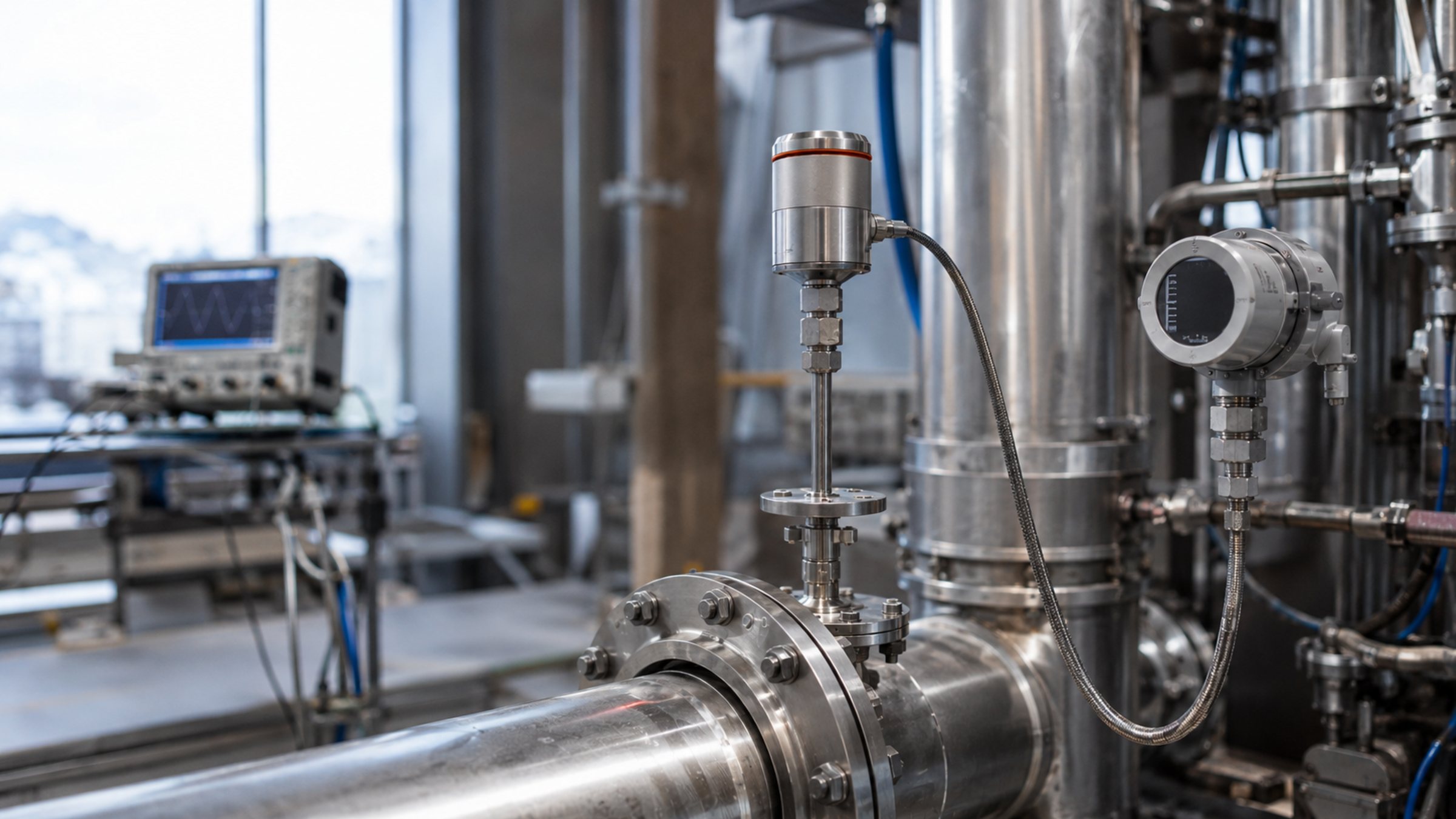
What is measured, how often, and what acts on it? The binding constraint on thermal performance is no longer the hardware, it is the control layer. Conventional control carries minutes of lag from thermal inertia while synchronised AI workloads swing from idle to full power in seconds, which forces conservative setpoints.
The binding constraint on AI infrastructure thermal performance is no longer the hardware. It is the control layer. Conventional proportional-integral-derivative control on a thermal loop carries three to five minutes of lag from thermal inertia. Synchronised AI training workloads swing from idle to full power in seconds. The gap between those two timescales is why operators run conservative setpoints, and conservative setpoints are why facilities leave compute on the table.
Decision
What Coral decided
Partner for the agent
Reinforcement-learning industrial control is a genuinely hard machine learning problem with a small number of credible practitioners and a validated production track record on rack-scale AI systems. Coral does not attempt to reproduce it. Published production results for this class of control show reductions in thermal spike magnitude of 75 to 80 percent against optimally tuned conventional control.
Instrument far beyond the norm
A typical immersion tank is measured with a handful of point probes. Coral's position is that this is inadequate for control and useless for learning.
Own the telemetry schema
Whoever defines how a pod is measured owns every layer above it.
Instrumentation
The instrumentation decisions
Spatially distributed thermal sensing. A single dielectric optical fibre acts as thousands of temperature measurement points along its length, carries no electrical risk, cannot corrode, and can be routed through a dielectric bath, along a manifold and across a busbar. Coral's assessment is that this technology is mature in energy and civil infrastructure and effectively absent from data centre immersion, which makes it one of the largest unexploited opportunities in the category.
Continuous fluid condition monitoring. Full-spectrum dielectric measurement detects fluid degradation, contamination and water ingress continuously, rather than by periodic laboratory sampling that discovers damage weeks after it begins.
Power telemetry as a leading thermal indicator. Rack power changes before coolant temperature does. Using power as the control input rather than temperature is what collapses control latency from minutes to seconds.
Shipping
The shipping baseline
Integrated PLC automation with Modbus TCP/IP monitoring across seven parameter classes, and a predictive-maintenance-ready data path. Coral publishes measured sensor count, sample rate, control loop latency and thermal spike suppression as the reinforcement-learning control layer and the distributed fibre sensing described above enter the fleet.
Coral does not publish a control performance figure it has not measured on its own hardware.