
What is Heat-Positive Infrastructure?
Heat-Positive Infrastructure is infrastructure whose thermal output is contracted, metered and delivered as a useful energy product to a named offtaker, rather than rejected to atmosphere. Three things must be present for heat to be contractible: proximity to a demand, a temperature grade that demand can actually use, and a buffer that makes supply firm regardless of GPU utilisation.
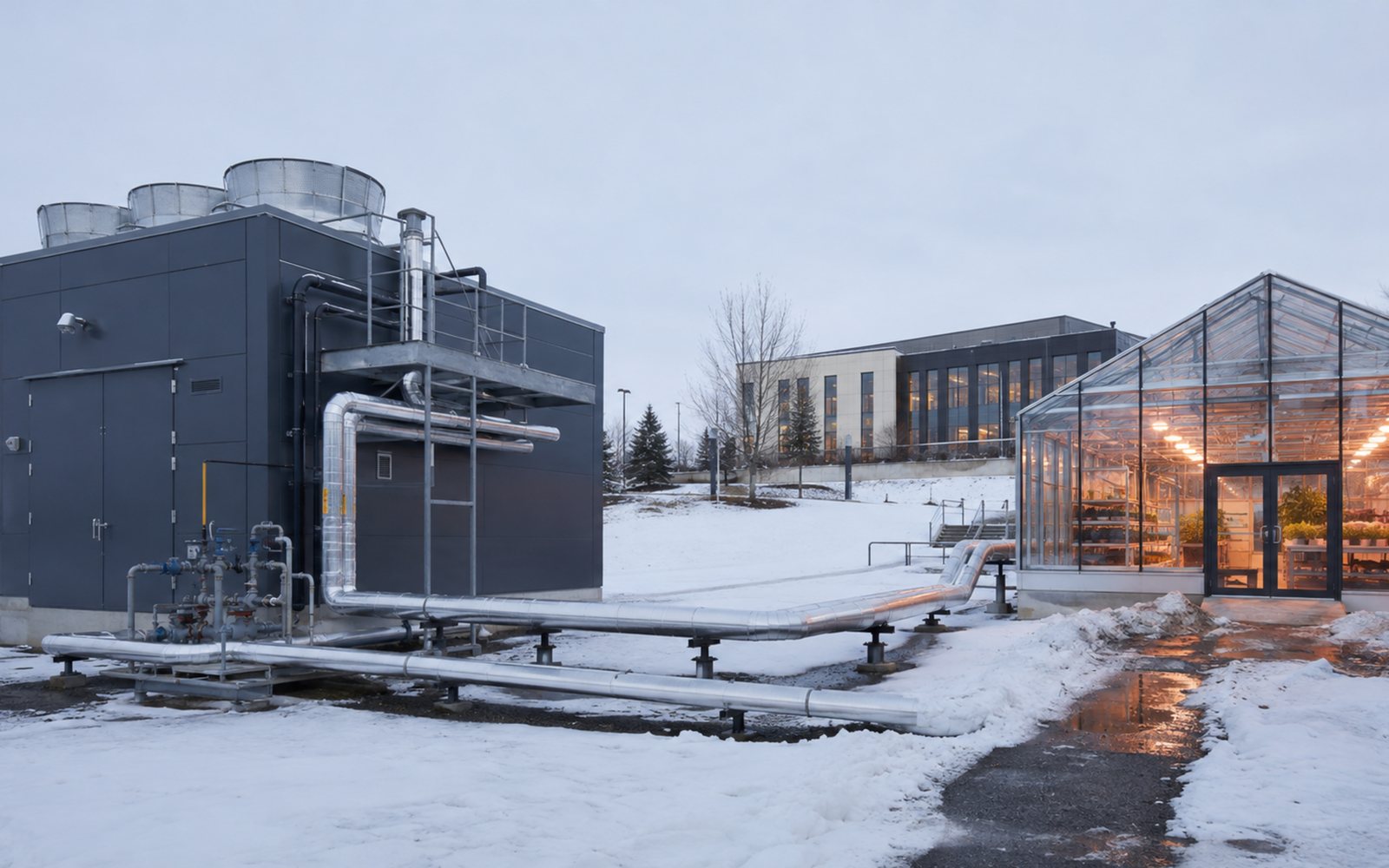
Definition
Heat-Positive Infrastructure is infrastructure whose thermal output is contracted, metered and delivered as a useful energy product to a named offtaker, rather than rejected to atmosphere.
Why it matters
A data centre that rejects its heat is a consumer of energy. A data centre that delivers contracted heat is simultaneously a consumer of electricity and a supplier of thermal energy, which changes its carbon accounting, its planning application and the balance sheet of the building next door.
What makes heat contractible
Three things, all of which must be present. Proximity to a demand. A temperature grade the demand can actually use. And a buffer that makes supply firm regardless of GPU utilisation.
Coral's position
Coral weights proximity to a heat offtaker equally with power availability and connectivity when selecting a site, and is building a standard heat supply agreement so that heat is sold under contract rather than donated as a gesture.
Take the vocabulary into a real site conversation.
An architecture review applies these terms to a specific building: its power envelope, its thermal capacity, its density target and its jurisdiction.